
Stomach
A muscular digestive organ between esophagus and small intestine.

Calicut Medical College · CC BY-SA 4.0
The stomach is a muscular, hollow organ in the upper gastrointestinal tract of humans and many other animals. It functions as a vital organ in the digestive system, involved in the gastric phase of digestion, where chemical breakdown of food occurs via digestive enzymes and gastric acid. The stomach also plays a role in regulating gut microbiota, influencing digestion and overall health.
- Capacity
- Normally about one litre; maximum adult volume 2–4 litres; up to 4–6 litres in extreme pathological distension
Lore & Background
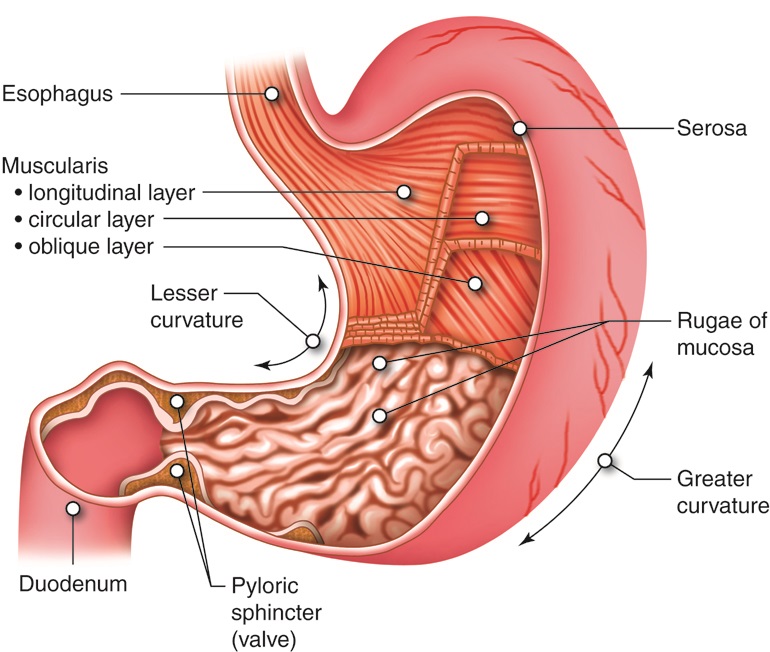
The stomach lies between the esophagus and the duodenum, the first part of the small intestine. It is located in the left upper quadrant of the abdominal cavity, with its top against the diaphragm and the pancreas behind it. A large double fold of visceral peritoneum called the greater omentum hangs down from the greater curvature. Two sphincters—the lower esophageal sphincter at the cardiac region and the pyloric sphincter at the duodenal junction—keep stomach contents contained. The stomach is surrounded by parasympathetic and sympathetic plexuses that regulate secretory and motor activity.
Reader's Guide
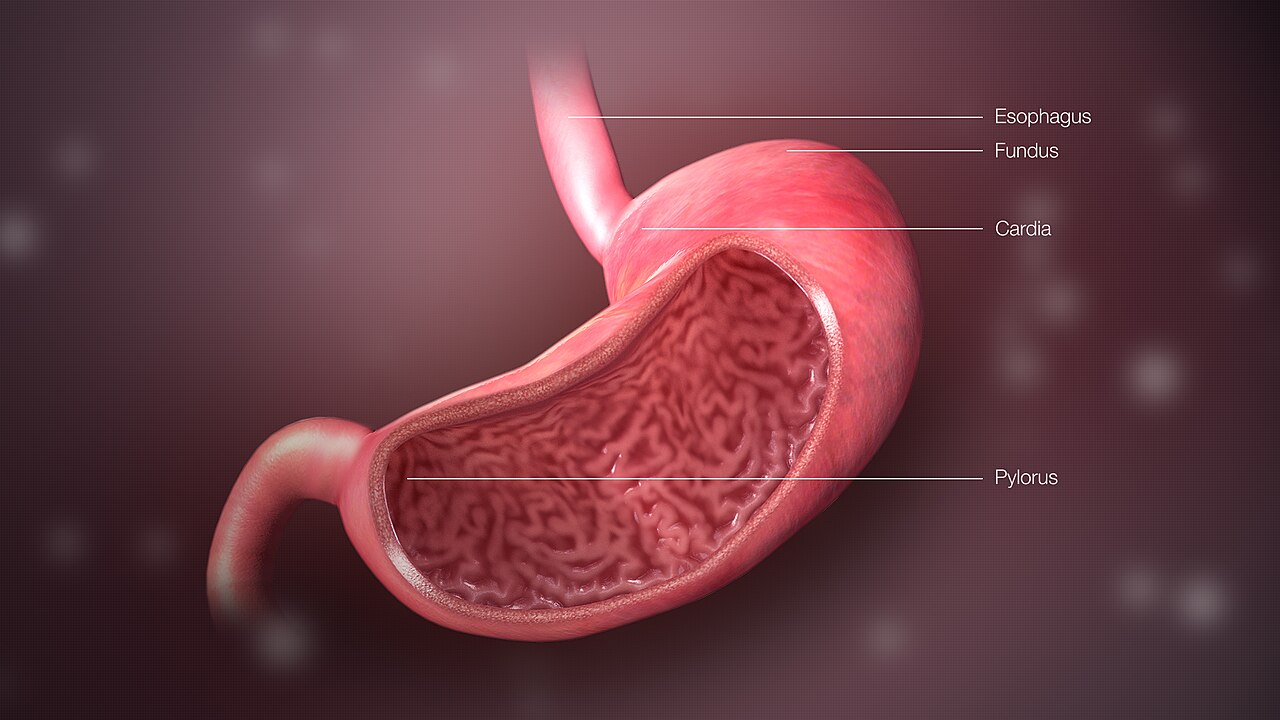
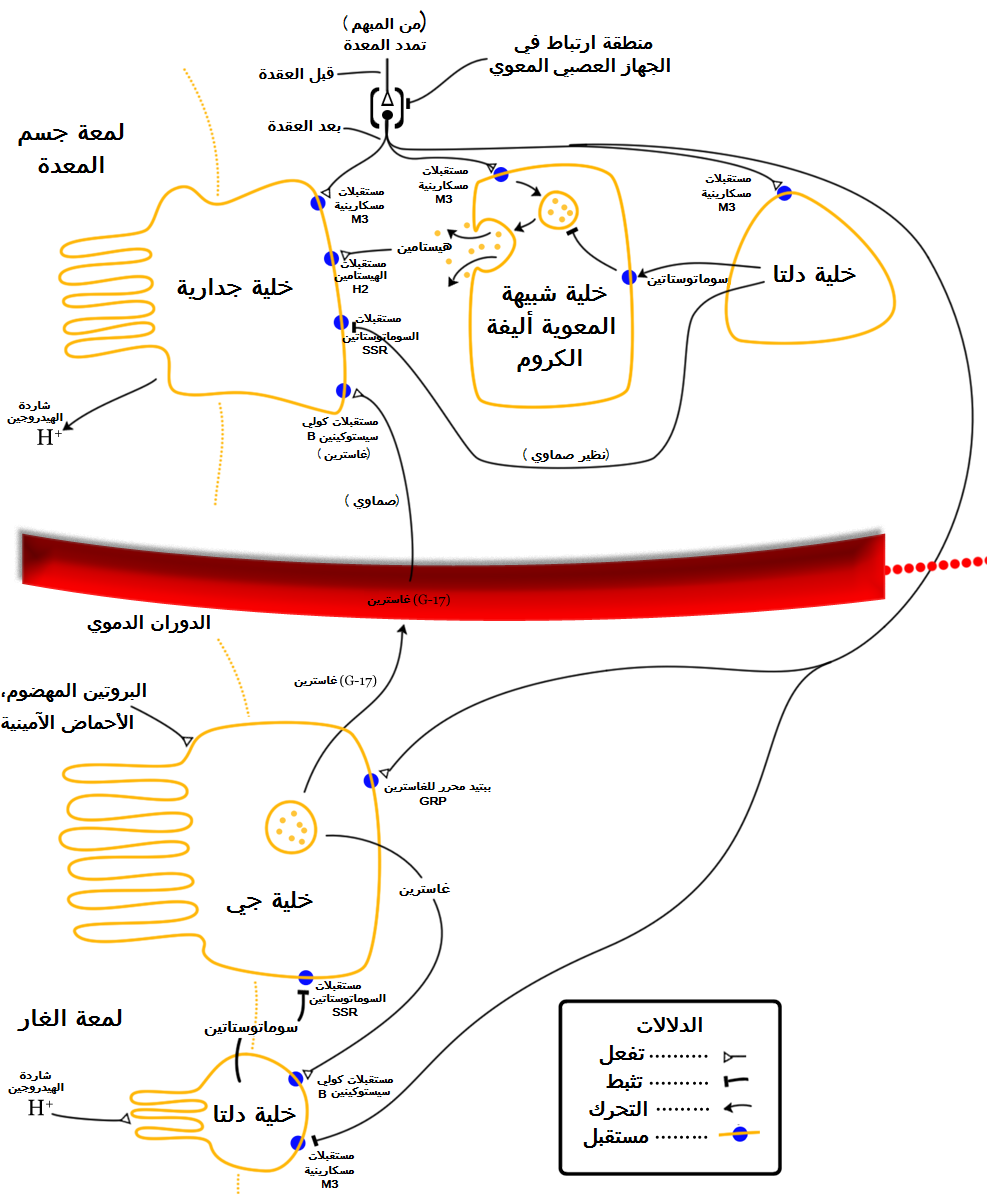
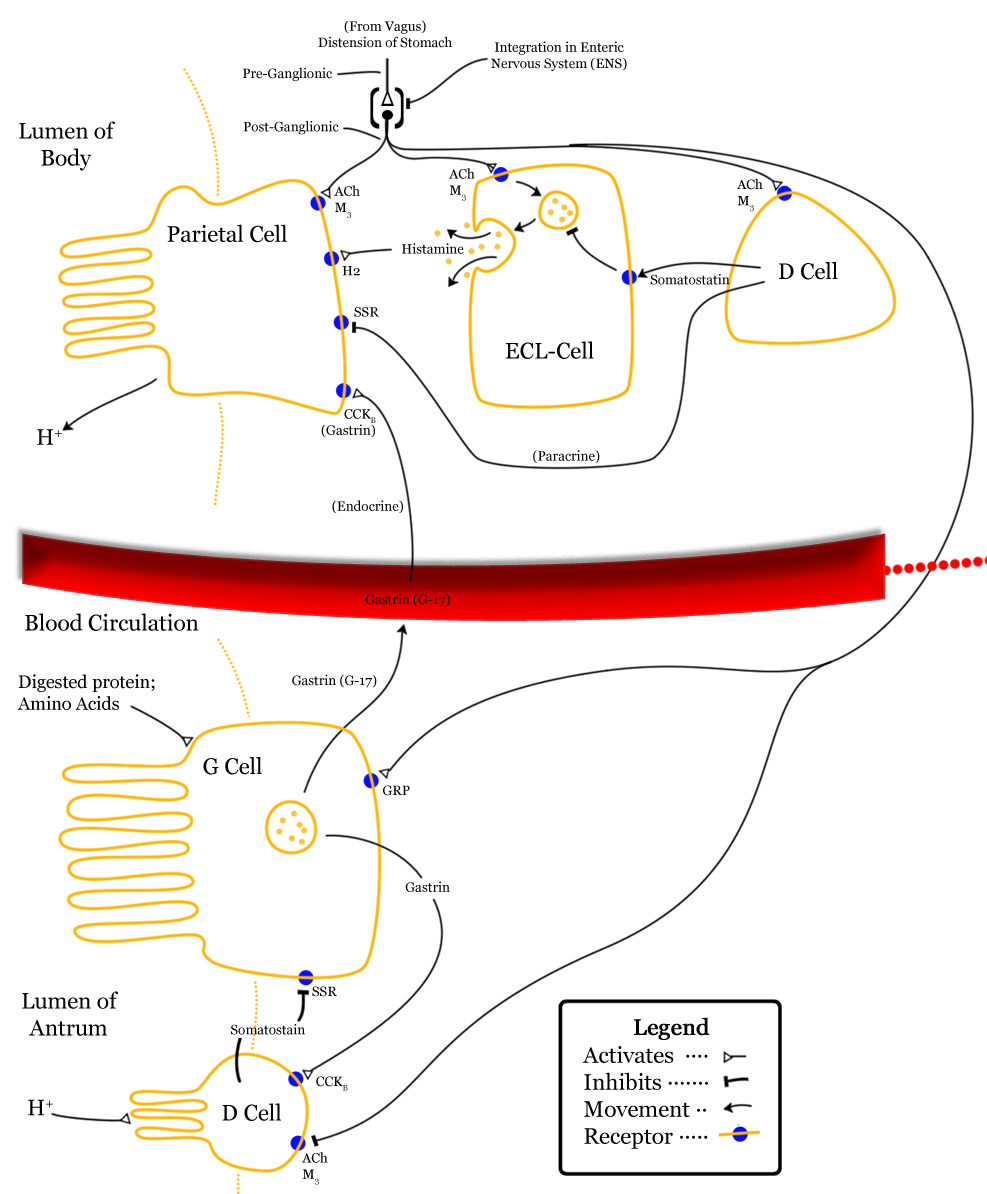
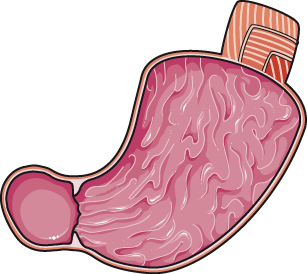
The stomach is distensible, normally expanding to hold about one litre of food, with a shape that depends on distension and surrounding viscera; when empty it is somewhat J-shaped, and when partially distended it becomes pyriform. In obese persons it is more horizontal, and a newborn's stomach holds only about 30 millilitres. The human stomach can be divided into four sections: cardia, fundus, body, and pylorus. The gastric cardia receives contents from the esophagus; the fundus is the dome-shaped upper part; the body is the main central region; and the pylorus connects to the duodenum via the pyloric sphincter. The stomach wall consists of mucosa, submucosa, muscular layer, subserosa, and serosa, with the muscular layer having three layers—inner oblique, middle circular, and outer longitudinal—the inner oblique being unique to the stomach. Gastric glands secrete hydrochloric acid, digestive enzymes, mucus, and hormones such as gastrin.
Did You Know?
- The Ancient Greek name for the stomach is gaster, used in medical terms such as gastric.
- The stomach can normally expand to hold about one litre of food, but volumes up to 4–6 litres have been observed in extreme pathological distension.
- The inner oblique muscle layer of the stomach is not seen in other parts of the digestive system.
- The pylorus is named from the Greek word for 'gatekeeper'.
Anatomical Architecture & Positioning
The stomach occupies the left upper quadrant of the abdominal cavity, nestled between the esophagus above and the duodenum below. Its dome-shaped fundus presses against the diaphragm, while the pancreas lies directly behind it. A large double fold of visceral peritoneum, the greater omentum, drapes from the greater curvature. The organ is divided into four sequential regions: the tiny cardia surrounding the esophageal opening, the fundus forming the upper curved dome, the body or corpus as the main central chamber, and the pylorus connecting to the duodenum. The cardia is marked by the z-line where epithelium transitions from stratified squamous to columnar. The stomach bed—the structures upon which the organ rests—includes the pancreatic tail, splenic artery, left kidney, left suprarenal gland, transverse colon with its mesocolon, the left crus of the diaphragm, and the left colic flexure. This term was coined around 1896 by Philip Polson at the Catholic University School of Medicine in Dublin, though it was later challenged by the surgeon-anatomist J Massey.
The Muscular Engine & Peristalsis
What sets the stomach apart from the rest of the gastrointestinal tract is its uniquely thick muscular wall, composed of three distinct layers of smooth muscle fibers arranged at angles to one another. The inner oblique layer is found nowhere else in the digestive system and is responsible for the powerful churning motion that physically breaks down food. The middle circular layer forms a thick, tonically constricted ring at the pylorus, creating a functional sphincter that regulates the release of chyme. The outer longitudinal layer completes the triad. Because of this triple-layered architecture, the stomach generates the maximum peristaltic force in the entire gut. Two sphincters govern its contents: the lower esophageal sphincter at the cardiac junction prevents backflow into the esophagus, while the pyloric sphincter at the duodenal junction meters out partially digested material. The antrum's walls contain thicker muscle cells and contract more forcefully than the fundus, giving the organ a gradient of mechanical power from top to bottom.
Digestive Function & Chemical Processing
The stomach serves as the central stage of the gastric phase of digestion, which follows the cephalic phase triggered by the sight, smell, and chewing of food. Within its lumen, secreted digestive enzymes and gastric acid work together to chemically break down ingested material. The organ also plays a role in regulating gut microbiota, thereby influencing broader digestive processes and overall health. Once food has been sufficiently processed, the pyloric sphincter releases the resulting chyme into the duodenum—the first and shortest segment of the small intestine—where peristalsis takes over to propel it through the remaining intestinal tract. The stomach's capacity is remarkably variable: a newborn's stomach holds roughly 30 millilitres, a typical adult can accommodate about one litre, and maximum adult volume ranges from two to four litres, with extreme observations reaching as high as fifteen litres. Its shape shifts with distension—J-shaped when empty, pyriform when partially filled, and more horizontal in obese individuals.
Vascular & Neural Infrastructure
The stomach's blood supply is distributed across its curvatures by a network of arteries. The lesser curvature receives the right gastric artery inferiorly and the left gastric artery superiorly, the latter also feeding the cardiac region. The greater curvature is served by the right gastroepiploic artery below and the left gastroepiploic artery above, while the fundus and upper greater curvature are nourished by five to seven short gastric arteries branching from the splenic artery. Lymphatic drainage flows through two sets of gastric lymph nodes into the intestinal lymph trunk and ultimately the cisterna chyli. Neural regulation is equally elaborate: parasympathetic (inhibitory) and sympathetic (stimulatory) plexuses—including the anterior gastric, posterior, superior, inferior, celiac, and myenteric networks—wrap around the organ to coordinate both its secretory and motor activities. This dual innervation ensures that the stomach's chemical and mechanical work is finely tuned to the body's changing needs.
Gallery
Frequently Asked Questions
Who is Stomach?
The stomach is a J-shaped muscular chamber in the upper abdomen, sitting between the esophagus and the small intestine. It acts as the central mixing and chemical-digestion hub of the gastrointestinal tract.
What are Stomach's powers/role?
It churns ingested food while releasing hydrochloric acid and pepsin to break down proteins during the gastric phase of digestion. It also helps shape the gut microbiome, which in turn influences nutrient absorption and overall systemic health.
How does Stomach's story end?
In a healthy adult the gastric lining renews itself continuously, so the organ does not simply wear out like a blood cell. Chronic insults such as H. pylori infection or long-term NSAID use, however, can erode that lining and progress to ulcers or, in rare cases, gastric carcinoma.
Why is Stomach important?
Without its acidic milieu and enzymatic action, dietary proteins would reach the small intestine largely intact, depriving the body of usable amino acids. It also paces the release of chyme so the downstream intestine is never flooded all at once.
How big is Stomach?
Under everyday conditions it holds roughly one litre of contents, but a healthy adult can comfortably accommodate two to four litres. In extreme pathological distension, volumes of four to six litres have been recorded before the risk of rupture becomes critical.
More in Physiology & Medicine 1-19
Spotted an error? Know more?
This is a living reference — every entry is fact-audited, and reader corrections feed straight into our audit queue. Suggest an edit · See this site's audit record