
Spleen
Organ filtering blood and supporting immune function.

Hayden Soloviev · CC BY 4.0
The spleen is an organ found in almost all vertebrates, similar in structure to a large lymph node, acting primarily as a blood filter. It plays important roles in regard to red blood cells and the immune system, removing old red blood cells, holding a reserve of blood, and recycling iron.
- location
- Left upper quadrant of the abdomen, underneath the ninth, tenth, and eleventh ribs
- length
- 7 to 14 centimeters (3 to 5+1⁄2 inches) in healthy adult humans
- color
- Purple
- blood_supply
- Splenic artery and short gastric arteries
- nerve_supply
- Splenic plexus, connecting celiac ganglia to vagus nerve
Lore & Background
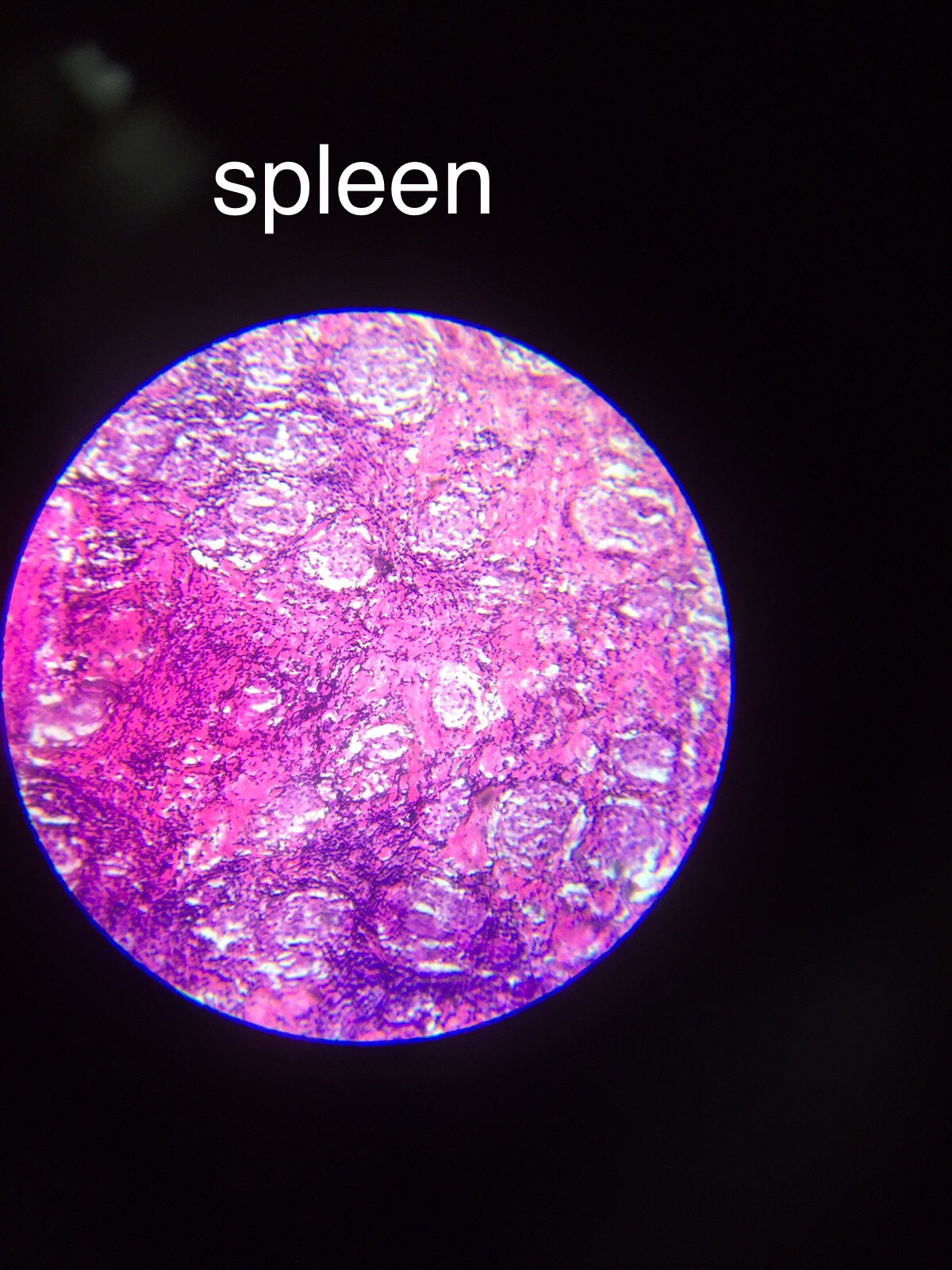
The spleen is derived from mesenchymal tissue, forming within and from the dorsal mesentery, sharing the same blood supply as the foregut organs. It contains red and white pulp; the white pulp houses T lymphocytes in periarteriolar lymphoid sheaths and B lymphocytes in follicles, enabling adaptive immune responses. The red pulp surrounds the white pulp and consists of venous sinuses and splenic cords, where phagocytic macrophages remove old or damaged red blood cells and pathogens, and stores monocytes for tissue repair. In humans, the spleen is located in the left upper quadrant of the abdomen, underneath the left part of the thoracic diaphragm, with a smooth, convex surface facing the diaphragm. It is typically attached by two or three main ligaments: the gastrosplenic, splenorenal (or lienorenal), and sometimes the splenophrenic ligament. The phrenocolic ligament is a separate peritoneal fold that indirectly supports the spleen but is not an attachment of the spleen itself. The spleen is innervated by the splenic plexus, and its functions—such as filtration and immune response—are primarily regulated by local and autonomic mechanisms, not directly by the hypothalamic–pituitary–adrenal axis or the subfornical organ. Enlargement of the spleen is known as splenomegaly, which can be caused by various conditions including sickle cell anemia, malaria, leukemia, and infections such as mononucleosis. Trauma can lead to splenic rupture, a medical emergency. Asplenia, a non-functioning spleen, may be congenital or caused by surgical removal (splenectomy) or disease, increasing susceptibility to certain infections.
Reader's Guide
The spleen is a critical component of the immune system and blood maintenance. Its role as a blood filter, removing old red blood cells and recycling iron, is essential for homeostasis. The organ's dual structure—white pulp for adaptive immunity and red pulp for innate immunity—enables it to respond to blood-borne antigens and pathogens. The spleen also stores a reserve of blood, monocytes, and platelets, which can be mobilized during hemorrhagic shock or tissue injury. Its absence, as in asplenia, predisposes individuals to infections, particularly from polysaccharide-encapsulated bacteria. The spleen's development from mesenchymal tissue, unlike most gut organs, and its unique blood supply from the celiac trunk, highlight its distinct embryological origin. Clinical conditions such as splenomegaly and splenic rupture underscore the organ's vulnerability and importance. Understanding the spleen's functions informs medical practices, including splenectomy and vaccination protocols for asplenic patients.
Did You Know?
- The spleen is purple in color and located in the left upper quadrant of the abdomen.
- The spleen produces all types of blood cells during fetal life, but after birth erythropoietic functions cease except in some hematologic disorders.
- The spleen is the largest collection of lymphoid tissue in the body.
Anatomy, Position & Vascular Wiring
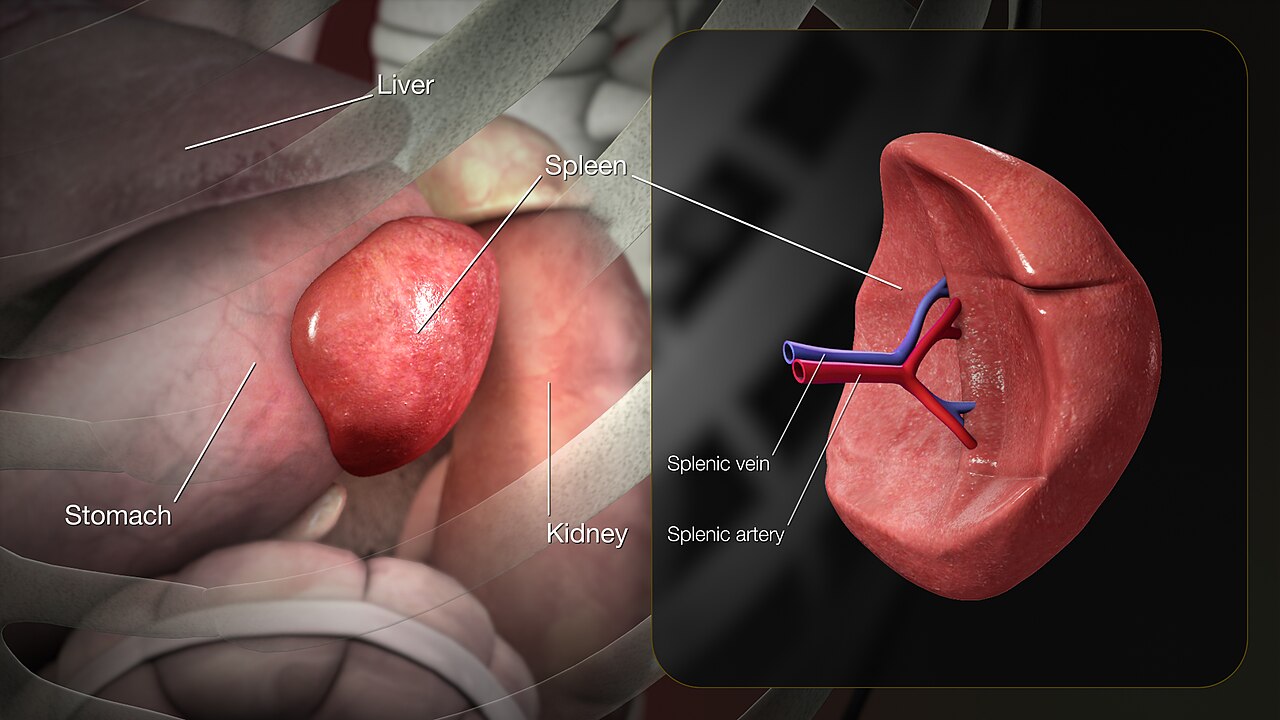
The spleen is a purple organ tucked into the left upper quadrant of the abdomen, resting beneath the left side of the thoracic diaphragm and shielded by the ninth through eleventh ribs. In healthy adults it spans roughly seven to fourteen centimetres and weighs between thirty and two hundred and thirty grams, with dimensions tracking the individual's height and body weight rather than sex or age. Its convex face presses against the diaphragm, while the opposite side is bisected by a ridge into a broad, concave gastric surface in contact with the posterior stomach wall and the tail of the pancreas, and a narrower, flattened renal surface abutting the upper anterior face of the left kidney and, at times, the left adrenal gland. Four ligaments—gastrosplenic, splenorenal, colicosplenic, and phrenocolic—secure the organ in position. At its centre, the hilum marks the insertion point for the splenic artery and vein alongside lymphatic channels and nerves. Blood arrives via the splenic artery and short gastric arteries, while innervation flows through the splenic plexus, bridging a celiac ganglion branch to the vagus nerve.
White Pulp & the Adaptive Immune Arsenal
The spleen's white pulp serves as a critical hub for adaptive immunity, housing both T and B lymphocytes in precisely arranged microenvironments. T lymphocytes cluster in periarteriolar lymphoid sheaths that wrap around central arterioles, while B lymphocytes occupy follicles positioned adjacent to these sheaths. This spatial arrangement is no accident: it places B cells in the direct path of blood-borne antigens flowing through the organ. When a B cell encounters its specific antigen, it activates and differentiates into a plasma cell, which then secretes antibodies—initially IgM and subsequently IgG. This antigen-specific response is a hallmark of the adaptive immune system and underscores why the spleen is often described as analogous to a large lymph node. Its removal, a procedure called splenectomy, leaves the body predisposed to certain infections, a clinical fact that highlights how indispensable this organ is to the body's capacity to mount targeted, memory-driven immune responses against foreign invaders.
Red Pulp: Filtration, Recycling & Innate Defense
Surrounding the white pulp and the marginal zone, the red pulp is built from a network of venous sinuses and splenic cords known as the cords of Billroth. As blood percolates through this region, it encounters actively phagocytic macrophages that strip out old or damaged red blood cells, antibody-coated cells, and circulating pathogens—a process that effectively filters the bloodstream. Beyond simple filtration, the red pulp stores monocytes that can be mobilized when tissue injury occurs elsewhere, such as the heart following a myocardial infarction. Once at the injury site, these monocytes differentiate into dendritic cells and macrophages to promote healing. The spleen also recycles iron from senescent red blood cells: the globin portion of hemoglobin is broken down into its constituent amino acids, while the heme portion is metabolized into bilirubin, which is subsequently cleared by the liver. In addition, the organ holds a reserve of up to roughly two hundred and forty millilitres of red blood cells releasable during hypovolemia or hypoxia, and it stores platelets and up to a quarter of the body's lymphocytes at any given time.
Fetal Hematopoiesis & Clinical Relevance
The spleen is unusual among gut-associated organs in its embryological origin: rather than arising from endoderm like most digestive structures, it develops from mesenchymal tissue within the dorsal mesentery, yet it still draws its blood supply from the celiac trunk shared with foregut organs. During fetal life, the spleen produces all types of blood cells and retains erythropoietic activity until roughly the fifth month of gestation. After birth, red blood cell production ceases under normal circumstances, though it can re-emerge in certain hematologic disorders. The organ continues to produce lymphocytes throughout life, maintaining its status as a hematopoietic organ. Clinically, enlargement of the spleen—termed splenomegaly—can signal a range of conditions including sickle cell anemia, malaria, sarcoidosis, bacterial endocarditis, leukemia, polycythemia vera, and pernicious anemia. The surgical removal of the spleen, a splenectomy, is a recognized procedure, and the organ's absence leaves the individual vulnerable to specific infections, underscoring its irreplaceable role in both innate and adaptive defense.
Gallery


Frequently Asked Questions
What is the spleen?
The spleen is a roughly purple, lymph-node-like organ that serves as a blood filter and immune-support structure in nearly all vertebrate species. In humans it sits tucked beneath the left ribcage and works closely with the circulatory and immune systems.
Where exactly is the spleen located in the body?
It rests in the left upper quadrant of the abdomen, hidden under the ninth, tenth, and eleventh ribs. Its blood arrives via the splenic artery and short gastric arteries, while its nerve supply runs through the splenic plexus linking the celiac ganglia to the vagus nerve.
What does the spleen actually do for you?
It strips out aged or damaged red blood cells, stores a reserve pool of blood for emergencies, and recycles the iron pulled from those broken-down cells. It also contributes to immune surveillance by housing lymphoid tissue that helps mount antibody responses.
How big is a healthy adult spleen?
In a typical adult human it measures roughly 7 to 14 centimeters (about 3 to 5½ inches) in length. Its color is a deep purple, and its structure closely resembles an enlarged lymph node.
Why is the spleen considered important even though people can live without it?
Because it handles red-blood-cell turnover, iron recycling, and a meaningful share of immune defense, its absence raises the risk of certain infections and mild anemia over time. Surgeons still treat it as a valuable organ to preserve whenever it is not directly damaged.
More in Physiology & Medicine 1-19
Spotted an error? Know more?
This is a living reference — every entry is fact-audited, and reader corrections feed straight into our audit queue. Suggest an edit · See this site's audit record