Acupuncture
Alternative medicine involving needle insertion, lacking scientific evidence of efficacy.

Acuhealth · CC BY-SA 3.0
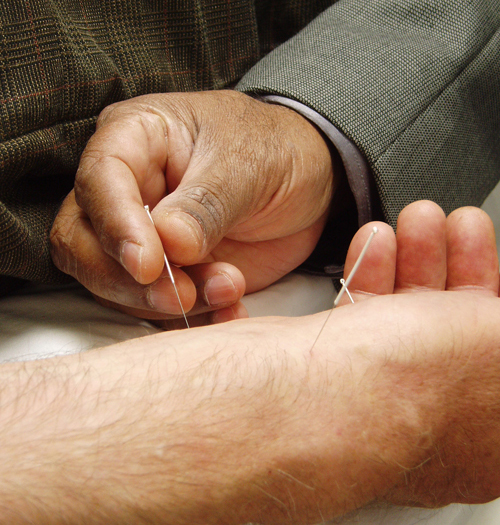
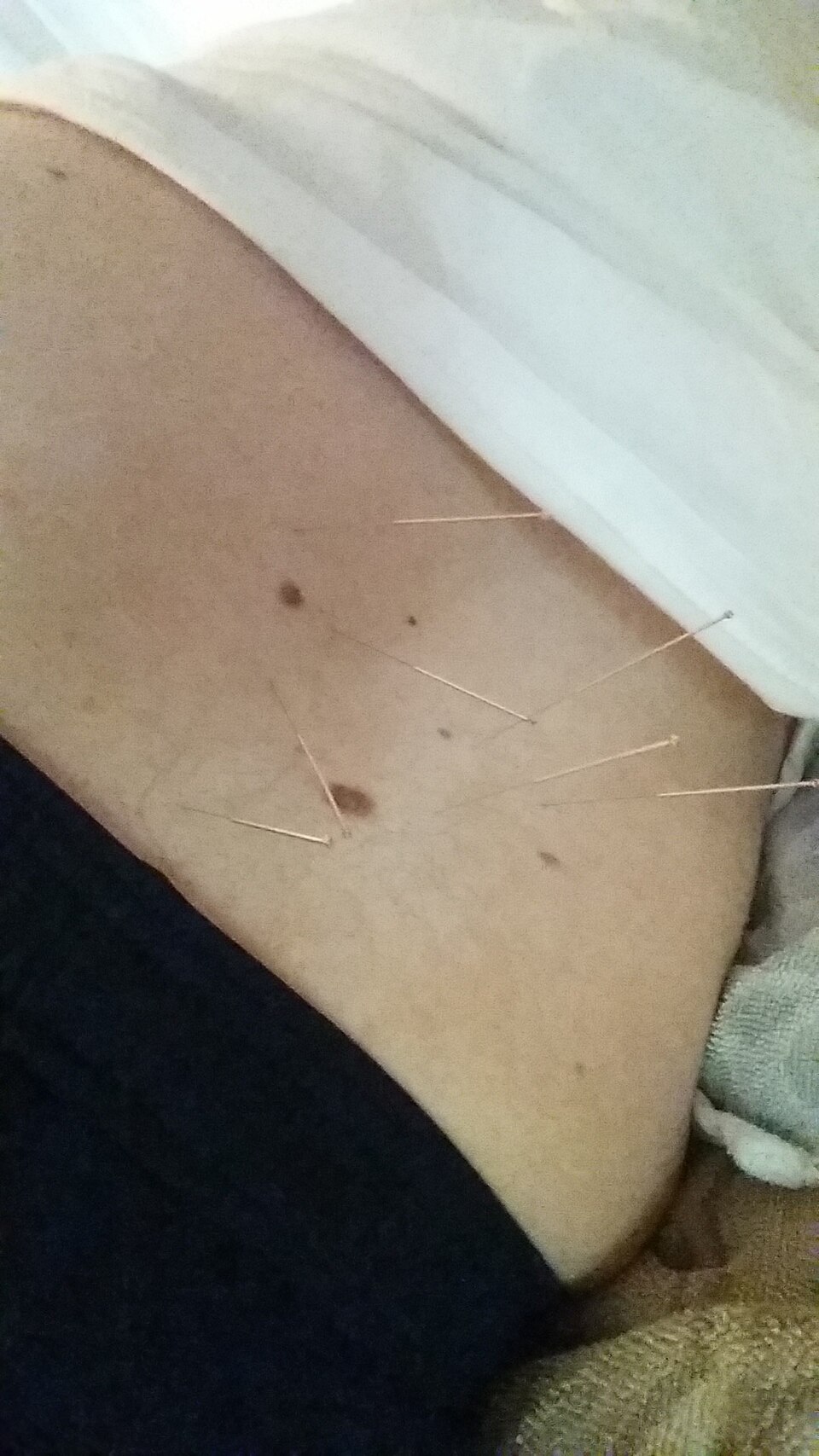
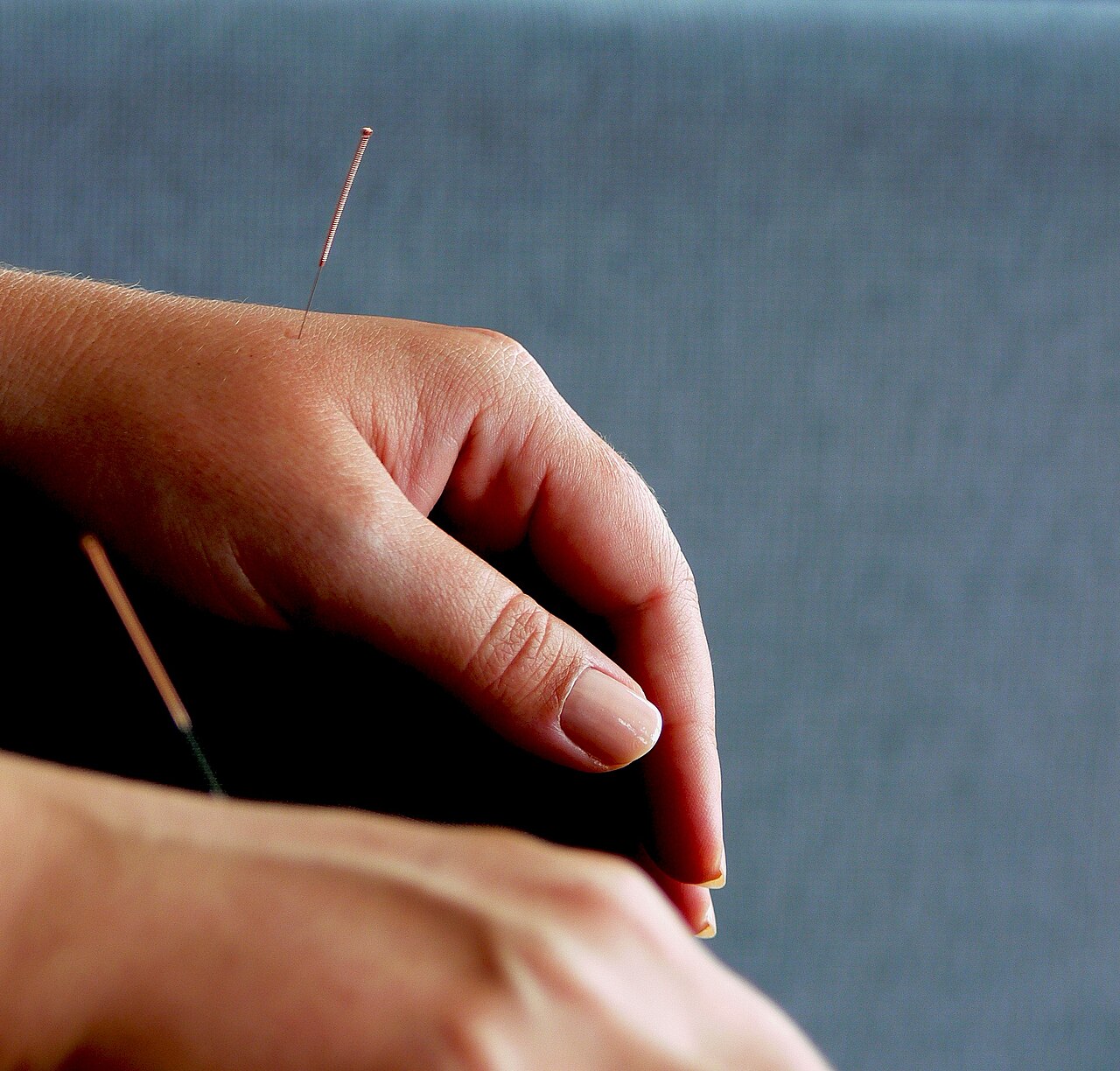
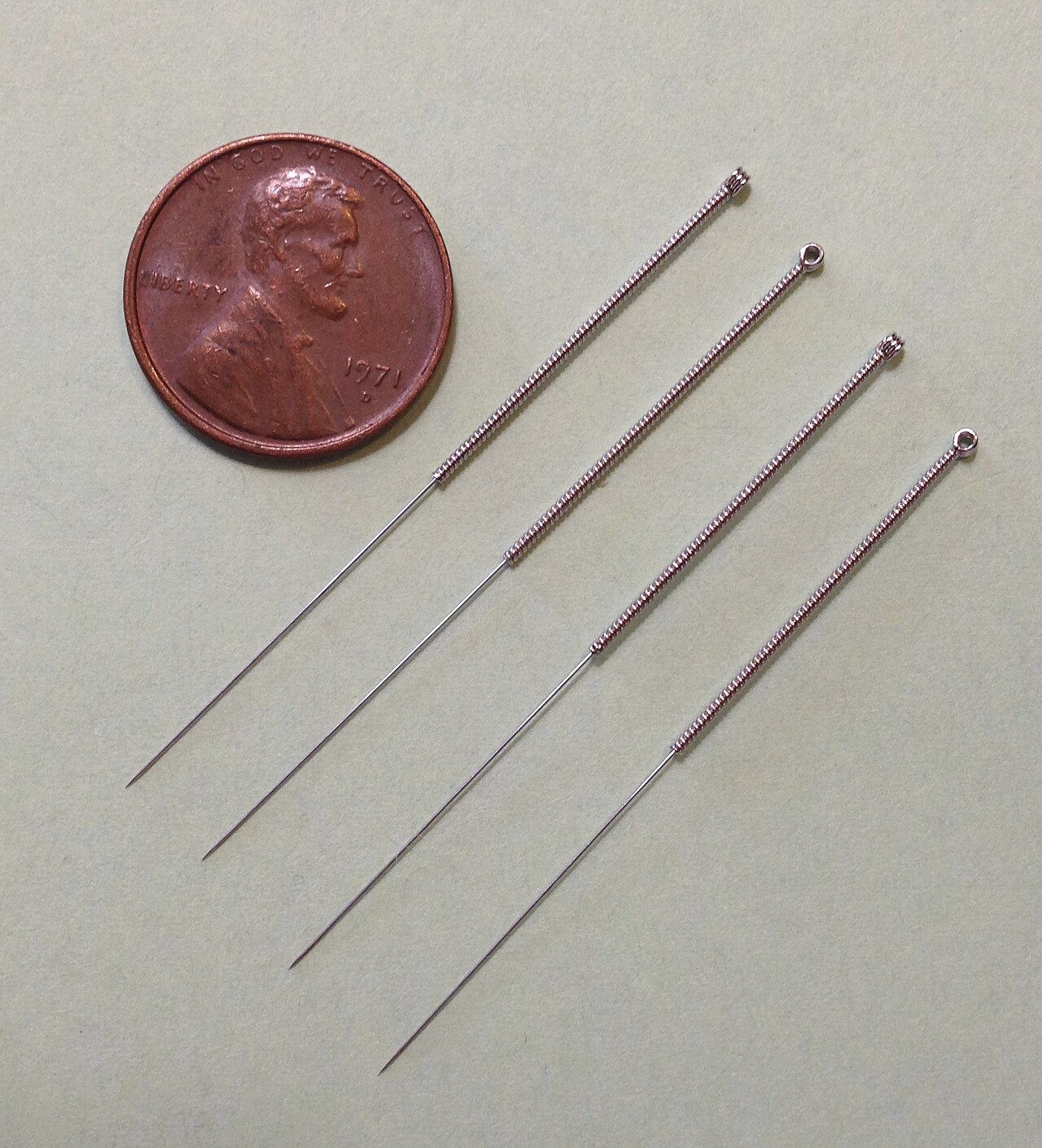
Acupuncture is a form of alternative medicine and a component of traditional Chinese medicine (TCM) in which thin needles are inserted into the body. It is characterized as a pseudoscience, with theories and practices not based on scientific knowledge, and has been described as quackery. Acupuncture is most often used for pain relief, though practitioners claim it can treat a wide range of conditions, typically in combination with other treatments.
- field
- Alternative medicine, traditional Chinese medicine
- known_for
- Insertion of thin needles into the body for therapeutic purposes
- market_value_2017
- US$24.55 billion
- market_share_leader_2017
- Europe (32.7%)
- estimated_market_size_2023
- US$55 billion
Lore & Background
Acupuncture is believed to have originated around 100 BC in China, around the time The Inner Classic of Huang Di (Huangdi Neijing) was published, though some experts suggest it could have been practiced earlier. Over time, conflicting claims and belief systems emerged about the effect of lunar, celestial and earthly cycles, yin and yang energies, and a body's 'rhythm' on treatment effectiveness. Acupuncture fluctuated in popularity in China due to changes in political leadership and the preferential use of rationalism or scientific evidence-based medicine. It spread first to Korea in the 6th century AD, then to Japan through medical missionaries, and then to Europe, beginning with France. In the 20th century, as it spread to the United States and Western countries, spiritual elements that conflicted with scientific knowledge were sometimes abandoned in favor of simply tapping needles into acupuncture points.
Reader's Guide
Its significance lies in its widespread use for pain relief despite a lack of good evidence of benefits from trials and systematic reviews, which suggest it is not an effective healthcare method. The practice is generally safe when performed by trained practitioners using clean techniques, with a low rate of mostly minor adverse effects, though serious events like pneumothorax and infections continue to be reported. Scientific investigation has found no histological or physiological evidence for traditional concepts such as qi, meridians, and acupuncture points, and many modern practitioners no longer support these ideas. Acupuncture's legacy is marked by its evolution from ancient Chinese beliefs to a modern, often secularized practice, and its persistence as a multi-billion-dollar industry despite being characterized as pseudoscience and quackery.
Did You Know?
- Acupuncture is characterized as a pseudoscience and quackery in the source article.
- The most frequently reported adverse events are pneumothorax and infections.
- Scientific investigation has found no evidence for qi, meridians, or acupuncture points.
The Meridian Architecture and Its Practical Reality
The acupuncture point system rests on a network of twenty major meridians that traverse the body. Twelve of these, called the primary meridians, run bilaterally and are linked by practitioners to specific internal organs. The other eight are termed extraordinary; while most of them are also bilateral, three break that pattern—one wraps around the waist area, and two follow the body's midline. Only those two midline extraordinary meridians carry their own dedicated points; the remaining six draw their points from the twelve primary channels. Beyond these fourteen major pathways, additional points exist within the broader Jīngluò nexus but sit outside the main meridians, earning the label "extra points." Notably, there is no recognized anatomical or physiological foundation for these points or channels. In actual clinical use, practitioners identify point locations through a blend of visible anatomical landmarks, tactile palpation, and the patient's own feedback.
Standardization, Nomenclature, and Persistent Ambiguity
The World Health Organization stepped in to bring order to a system that had long relied on traditional Chinese character names. In 1991 and again in 2014, the WHO issued a proposed standard international acupuncture nomenclature report cataloguing 361 classical points arranged by their meridian, alongside 48 extra points and scalp acupuncture points. A 1993 publication narrowed its focus to those 361 classical points. Under this scheme, each point receives a unique identifier combining the meridian abbreviation with its sequential number on that channel—for instance, Lu-9 marks the ninth point along the lung meridian. Some points, however, carry multiple traditional names; the lung meridian's ninth point is known both as tài yuān and gui xin. One notable ambiguity persists on the urinary bladder meridian, where fourteen points on the outer back line can be inserted following one of two reference points. Extra points lack any universally agreed-upon numbering, so their identification still depends on the original Chinese-character nomenclature.
The Extraordinary Meridians and Their Broader Significance
The eight extraordinary meridians occupy a distinctive place in Traditional Chinese Medicine. While they are structurally important to the meridian map, only two of them—the Governing Vessel (Du) and the Conception Vessel (Ren)—possess points that are not shared with the twelve primary channels. The other six extraordinary meridians are essentially composed of points borrowed from those primary pathways. Despite this, the extraordinary meridians hold particular significance outside the clinical acupuncture setting. They are described as being of pivotal importance in the study of qigong, tai chi, and Chinese alchemy, suggesting their conceptual role extends well beyond point-location therapy. The Governing and Conception vessels both run along the body's midline, which distinguishes them from the other six extraordinary meridians that are bilateral. This midline placement and their unique point ownership set them apart as the only extraordinary channels with an independent point inventory in the standard WHO classification.
Naming Logic Across the Twelve Primary Channels
Each of the twelve primary meridians carries a Chinese name that encodes several pieces of information simultaneously. The name indicates whether the channel originates in the hand or the foot, its association with a particular yin or yang quality (Greater, Lesser, or Faint), and its link to a specific organ. For example, the lung meridian is called "The Lung channel of Hand, Greater Yin," while the heart meridian is "The Heart channel of Hand, Lesser Yin." The stomach and spleen channels follow the foot, and the bladder and gallbladder channels are also foot-based, each paired with a corresponding yin-yang designation. In practice, these channels are abbreviated for convenience—LU, LI, ST, SP, HE, SI, BL, KI, PC, TB, GB, and LR—allowing practitioners to reference points quickly. The triple burner meridian, also called San Jiao or triple-heater, adds another layer of nomenclatural complexity, with multiple English renderings in circulation. This systematic naming, combined with the WHO numbering, gives each of the 361 classical points a precise and reproducible address.
Gallery


Frequently Asked Questions
What is Acupuncture in the context of physiology & medicine?
Acupuncture is a needle-based therapeutic practice originating from traditional Chinese medicine, in which very thin needles are inserted into specific points on the body. It is classified under alternative medicine rather than evidence-based conventional physiology.
What conditions does Acupuncture claim to address?
It is most frequently sought out for pain relief, though practitioners assert it can help with a wide variety of other ailments. In clinical settings it is typically paired with additional treatments rather than administered as a standalone intervention.
Is Acupuncture scientifically validated?
No; it is broadly regarded as a pseudoscience because its theoretical framework and claimed mechanisms are not grounded in established scientific knowledge. Critics in the medical community have gone so far as to describe the practice as quackery.
How large is the global Acupuncture market?
The sector was valued at approximately US$24.55 billion in 2017 and is projected to reach around US$55 billion by 2023. This growth underscores sustained consumer interest even in the absence of strong clinical evidence for its efficacy.
Which region dominates the Acupuncture market?
Europe held the largest share of global acupuncture spending in 2017, accounting for roughly 32.7% of the total. This makes it the leading region for both practice and commercial activity in the field.
More in Physiology & Medicine 1-19
Spotted an error? Know more?
This is a living reference — every entry is fact-audited, and reader corrections feed straight into our audit queue. Suggest an edit · See this site's audit record